

 English
 Español


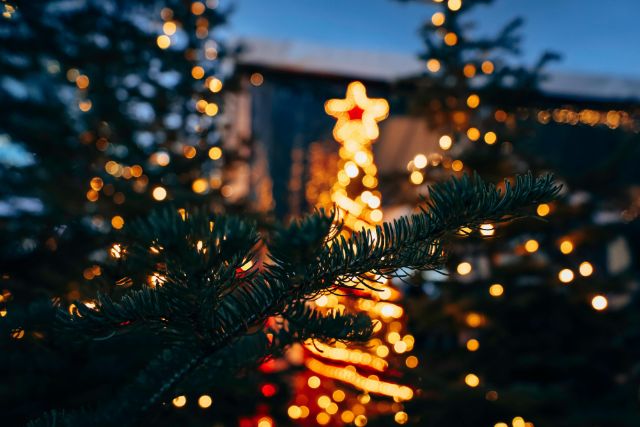
There’s one thing that surprises almost everyone spending Christmas in Tenerife for the first time: the island celebrates the festive season in a way that’s nothing like what they know from home. It isn’t just the weather. Canarian Christmas has its own dates, its own music, its own food and its own rhythm. And much of it doesn’t feature in the usual travel guides.
This guide covers the Canary Islands Christmas traditions that most surprise European visitors: when they happen, where to find them and why they’re worth actively seeking out during your stay in Costa Adeje.
The Canarian Christmas calendar starts earlier and ends later
In northern Europe, Christmas is concentrated on 24 and 25 December. In the Canary Islands, the festive season runs from early December to 6 January, and that final day (Three Kings’ Day) is culturally more important than Christmas Day itself.
This longer calendar has a practical consequence for travellers: if you arrive in the first week of January, you haven’t missed Christmas. You’ll catch it at its most festive.
The countdown officially begins on 8 December, the Feast of the Immaculate Conception, when many towns across the island set up their nativity scenes and switch on the Christmas lights. From then on, the festive atmosphere carries on without a break until the night of 5 January.
Parrandas: the Christmas music that takes to the streets
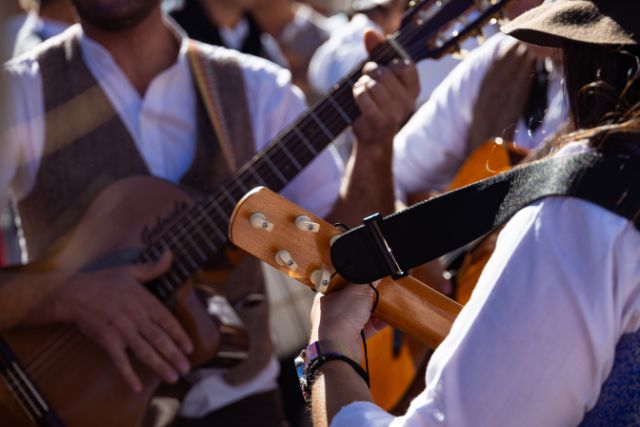
If you wander through Tenerife’s inland towns in December (Adeje, Arona, Guía de Isora) you may at some point hear string music and singing drifting out of a street or a bar. What you’re most likely hearing is a Parranda.
Parrandas are groups of locals who make their way through the streets, bars and homes singing traditional Canarian Christmas carols. They aren’t performances staged for tourists. They’re a centuries-old island tradition that remains a natural part of the festivities in Tenerife’s neighbourhoods and towns.
The instrument that defines Canarian Parrandas is the timple: a five-string instrument similar to a ukulele but with a higher, brighter sound, and the traditional instrument of the archipelago. Alongside it, guitars, bandurrias, lutes and tambourines keep the rhythm while the group sings.
If you come across a Parranda on an evening stroll, the done thing is to stop and listen. In many cases the group is perfectly happy for people to stay a while. It’s one of those unplanned moments that ends up being more memorable than any organised excursion.
The Canarian nativity scene: an art form that goes far beyond decoration
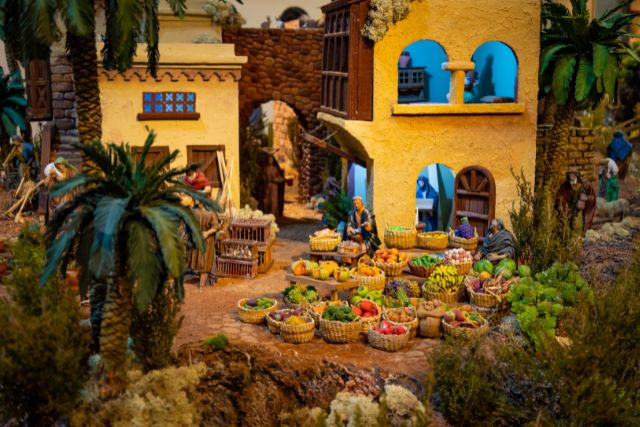
In Canarian homes, the Belén (the nativity scene) is the main Christmas decoration. Far more so than the tree. And in the Canary Islands, setting up the Belén is a serious business.
Canarian nativity scenes have several features that set them apart. The most striking is their scale: many families devote an entire room, or at least a large corner of the living room, to building a complete landscape with houses, rivers, mountains, animals and handcrafted figures. Some take weeks to put together.
Another characteristic feature is the way the Canarian landscape is woven into the scenery: volcanoes, ravines, island vegetation, even replicas of local landmarks. The Nativity is set in Tenerife, and the result has a very distinctive visual identity.
The island’s most elaborate public nativity scenes can be found in:
- Santa Cruz de Tenerife: the City Council’s nativity scene in Plaza de España is one of the most visited in the Canary Islands.
- La Orotava: famous for its salt nativity scenes in spring, at Christmas the town also sets up large-scale nativity scenes in its historic centre.
- Adeje: the closest municipality to Costa Adeje has its own municipal nativity scene and a Christmas programme that includes guided tours.
If you visit any of these towns between 8 December and 6 January, the nativity scenes are open to the public free of charge.
Christmas food in the Canary Islands: dishes you won’t see on the menu the rest of the year
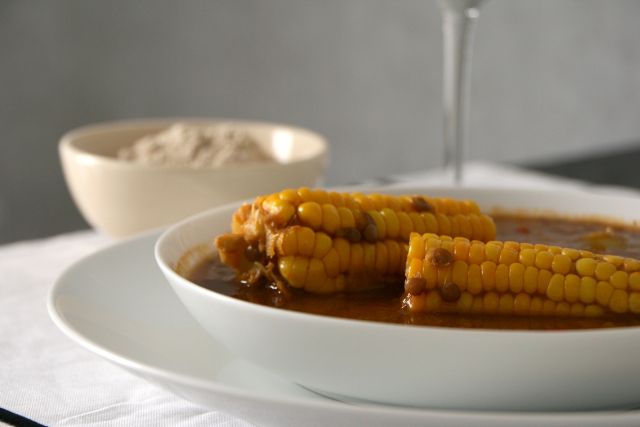
The Canarian Christmas table features dishes that appear only at this time of year. Knowing about them in advance makes them easier to order and track down.
Canarian truchas: the sweet that defines Christmas
Truchas are the quintessential Christmas sweet in the Canary Islands. Despite the name (trucha means “trout”), they have nothing to do with fish: they’re small, half-moon-shaped fried pastries filled with cabello de ángel (a candied citron jam) or sweet potato with cinnamon and sugar, then dusted with icing sugar.
You’ll find them in every bakery, at Christmas markets and in many supermarkets throughout December and early January. They’re delicate, crumble easily and are best eaten freshly made. If you spot a tray of them at a craft market, it’s worth trying one there and then.
Ron miel: the drink of the festive season
Canarian ron miel (honey rum) is a liqueur made from white rum blended with palm or flower honey, at around 20% ABV. At Christmas it appears on practically every table as an after-dinner drink, both at family gatherings and in bars.
Unlike regular rum, ron miel is smooth and sweet, without the burn of stronger spirits. It can be enjoyed neat, over ice, or warm with a slice of lemon. European visitors often take it home as a gift because it isn’t found outside the archipelago.
The best-known brands in Tenerife are Arehucas and Aldea, both available in any supermarket and in the shops along the Fañabé promenade.
Bienmesabe: the almond dessert
Bienmesabe is a sweet cream made from ground almonds, sugar, egg and lemon, with a dense texture and an intense flavour. Although it’s part of Canarian cuisine all year round, at Christmas it turns up more often on family tables and on restaurants’ festive menus.
It’s served on its own as a dessert or alongside ice cream. Its name literally means “how good it tastes to me”, which is a pretty accurate description.
Suckling pig and watercress stew: the Christmas Eve dinner
Christmas Eve dinner in many Canarian homes features two dishes that rarely appear on the menu the rest of the year: roast suckling pig, slow-cooked in the oven, and potaje de berros, a thick watercress stew with potatoes, millo (sweetcorn) and pulses that, in winter, features on the menus of the island’s most traditional restaurants.
If you want to try the most authentic version of potaje de berros, the restaurants in Adeje’s old town and the guachinches in the north of the island are the best places to find it.
The Three Kings Parade: the most eagerly awaited night of the year
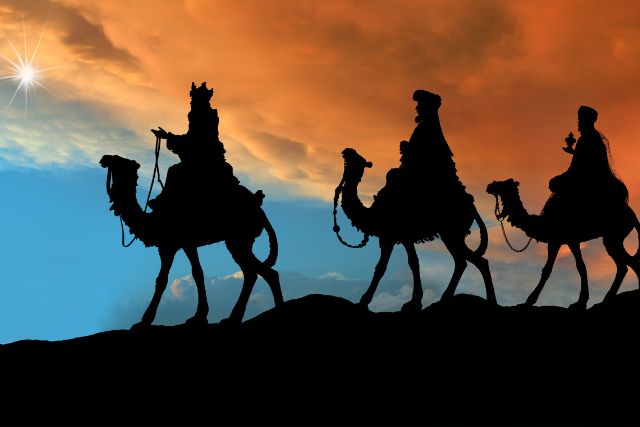
The evening of 5 January is, for many Canarian families, the most important night of the entire festive season. It’s when the Three Wise Men (Melchior, Caspar and Balthazar) ride through the streets of every town on floats, throwing sweets to the crowds before leaving presents in people’s homes overnight.
Tenerife’s Cabalgatas de Reyes (Three Kings Parades) have a surprisingly high production value for anyone used to traditions where presents arrive on 25 December. There are elaborate floats, music, all kinds of characters and huge public turnout. The atmosphere on the streets of any town on the island on the night of 5 January is hard to beat.
The biggest parades on the island are in Santa Cruz de Tenerife and La Laguna, but if you’re staying in Costa Adeje, the Adeje parade is easy to reach (15 minutes by car) and has a more intimate, family feel.
Practical tip: parades usually start between 6pm and 7pm. Arriving early to get a good spot on the street is especially important if you’re going with children.
Where to experience these traditions from Costa Adeje
Most of these traditions are concentrated in the historic centres of inland towns (Adeje, Arona, Guía de Isora, La Orotava) rather than in the coastal resort area. That means to experience them properly, you’ll need to venture out a little.
From Villa Adeje Beach, the logistics are simple:
- Adeje town: 15 minutes by car. Municipal nativity scene, Three Kings Parade, the council’s Christmas programme and several traditional restaurants in the old town where you’ll find truchas, potaje de berros and ron miel.
- Santa Cruz de Tenerife and La Laguna: 45–50 minutes by car. For the most elaborate nativity scenes, the biggest parades and the island’s fullest Christmas atmosphere.
- La Orotava: 50–55 minutes. For the nativity scenes in its historic centre, which is listed as a Site of Cultural Interest.
The hotel’s all-inclusive board covers all your meals, which makes it easy to plan full-day excursions without worrying about where to eat: have breakfast at the hotel, spend the day exploring inland and come back for dinner.
Frequently asked questions
When exactly is Christmas in the Canary Islands?
The Canarian festive season runs from 8 December to 6 January. Three Kings’ Day (6 January) is the most important date, when children receive their presents. The Three Kings Parades take place on the night of 5 January.
Where can I find Canarian truchas in Costa Adeje?
In the bakeries along the Fañabé promenade and at the Christmas markets in Costa Adeje and Los Cristianos throughout December. For the most traditional, handmade versions, the bakeries in Adeje’s old town make some of the best in the south of the island.
Is it easy to see a Christmas Parranda as a tourist?
Parrandas don’t follow a fixed schedule, but they’re a common sight in the bars and streets of inland towns on December evenings. A wander around Adeje’s old town on any weekend evening in December improves your chances of coming across one.
What’s the difference between Parrandas and Ranchos de Ánimas?
Parrandas are groups who sing carols in a festive, participatory way, making their way through bars and homes. Ranchos de Ánimas are groups of medieval religious origin with a more solemn repertoire, performing mainly in churches and squares on Christmas Eve. Parrandas are more common and easier for visitors to experience.
Can I buy ron miel to take home?
Yes, no problem at all. It’s available in supermarkets, souvenir shops and the duty-free shops at the airport. 70cl bottles from brands such as Arehucas or Aldea are the most common and can be found in any large supermarket on the island.
Christmas in the Canary Islands has more layers than you can see from the coast. If you spend a day or two of your December stay in Costa Adeje exploring the island’s interior, you’ll find a Christmas you didn’t expect and probably won’t forget. Check availability at Villa Adeje Beach and book your Christmas dates.


